
Ever seen a company post record profits, only to see its stock price tank? It feels like a scam, right? The truth is, profit isn't cash. Profit is an opinion, but cash is a fact. A company can look great on paper, with soaring sales and income, but if it doesn't have actual cash in the bank to pay its bills, it's driving full speed toward a cliff. This is where the Cash Flow Statement comes in. Think of it as peeking into a company’s bank account. It’s the ultimate truth-teller, showing you exactly where the money came from and where it went. Let's break it down without the jargon. The 3 Buckets of Cash: Where the Money Moves Imagine a company’s cash moves through three giant buckets. By seeing how much is in each, you can understand its story. 1. Operating Cash Flow: The Engine Room 🚗 This is the most critical number. It’s the cash generated from the company's core business operations. Think of it this way: If you own a bakery, this is the cash you get from selling cakes and coffee, minus the cash you spend on flour, sugar, and paying your employees. What it tells you: A healthy, growing positive number here means the business itself is a money-making machine. A negative number is a huge red flag 🚩. It's like an engine burning more fuel than it produces in power. It means the company is bleeding cash just to stay open. 2. Investing Cash Flow: Building the Future 🏗️ This bucket shows how much cash the company is spending on its future growth or making from selling old assets. Real-world example: When Apple spends billions building a new data center or Tesla builds a new Gigafactory, that cash drain shows up here. It’s usually a negative number for a growing company, and that’s a good thing! It means they are reinvesting in the business. What it tells you: Are they planting seeds for future growth (buying new tech, factories) or are they selling off parts of the business just to raise cash? 3. Financing Cash Flow: The Company's Bank 💰 This shows how a company raises money and how it pays it back to investors and lenders. It includes: Taking out loans, issuing new stock, paying back debt, buying back its own shares, or paying you a dividend. What it tells you: A company taking on a lot of new debt might be fueling risky expansion. A company consistently paying dividends or buying back stock is often a sign of a mature, confident business returning cash to its shareholders. The Real Treasure: Free Cash Flow 💎 So what’s the golden metric? It's Free Cash Flow (FCF). After the company pays its daily bills (from Operations) and invests in its future (from Investing), the cash that’s left over is the Free Cash Flow. This is the treasure. This is the pure cash profit the company has at its disposal. It’s what they can use to: Pay you dividends 💸 Buy back stock (making your shares more valuable) Pay off debt Acquire other companies A company with strong, growing Free Cash Flow is a beautiful thing. It's a sign of a healthy, sustainable business that can reward its investors for years to come. So next time you analyze a company, don't just look at the profits. Dig deeper and follow the cash. It will never lie to you. What do you think? Does looking at cash flow change how you see your favorite stocks? Let me know in the comments! Follow me for more simple, smart investing strategy. Join the Relax to Rich Club, where we grow wealth the calm, thoughtful way. ✨

Is a “Profitable” Company Secretly Broke? The Cash Flow Secret Every Investor Must Know

Ever seen a company post record profits, only to see its stock price tank? It feels like a scam, right?
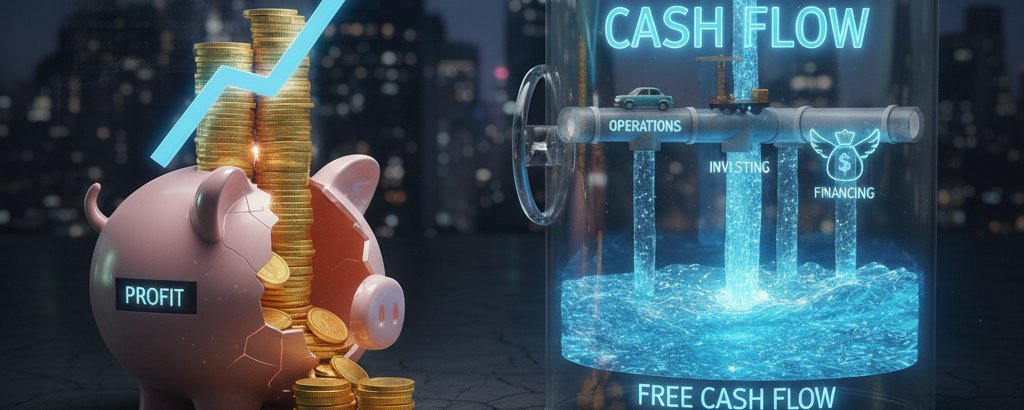
The truth is, profit isn’t cash. Profit is an opinion, but cash is a fact. A company can look great on paper, with soaring sales and income, but if it doesn’t have actual cash in the bank to pay its bills, it’s driving full speed toward a cliff.
This is where the Cash Flow Statement comes in. Think of it as peeking into a company’s bank account. It’s the ultimate truth-teller, showing you exactly where the money came from and where it went.
Let’s break it down without the jargon.

The 3 Buckets of Cash: Where the Money Moves

Imagine a company’s cash moves through three giant buckets. By seeing how much is in each, you can understand its story.
1. Operating Cash Flow: The Engine Room 🚗
This is the most critical number. It’s the cash generated from the company’s core business operations.
  • Think of it this way: If you own a bakery, this is the cash you get from selling cakes and coffee, minus the cash you spend on flour, sugar, and paying your employees.
  • What it tells you: A healthy, growing positive number here means the business itself is a money-making machine. A negative number is a huge red flag 🚩. It’s like an engine burning more fuel than it produces in power. It means the company is bleeding cash just to stay open.
2. Investing Cash Flow: Building the Future 🏗️
This bucket shows how much cash the company is spending on its future growth or making from selling old assets.
  • Real-world example: When Apple spends billions building a new data center or Tesla builds a new Gigafactory, that cash drain shows up here. It’s usually a negative number for a growing company, and that’s a good thing! It means they are reinvesting in the business.
  • What it tells you: Are they planting seeds for future growth (buying new tech, factories) or are they selling off parts of the business just to raise cash?
3. Financing Cash Flow: The Company’s Bank 💰
This shows how a company raises money and how it pays it back to investors and lenders.
  • It includes: Taking out loans, issuing new stock, paying back debt, buying back its own shares, or paying you a dividend.
  • What it tells you: A company taking on a lot of new debt might be fueling risky expansion. A company consistently paying dividends or buying back stock is often a sign of a mature, confident business returning cash to its shareholders.

The Real Treasure: Free Cash Flow 💎

So what’s the golden metric? It’s Free Cash Flow (FCF).
After the company pays its daily bills (from Operations) and invests in its future (from Investing), the cash that’s left over is the Free Cash Flow.
This is the treasure. This is the pure cash profit the company has at its disposal. It’s what they can use to:
  • Pay you dividends 💸
  • Buy back stock (making your shares more valuable)
  • Pay off debt
  • Acquire other companies
A company with strong, growing Free Cash Flow is a beautiful thing. It’s a sign of a healthy, sustainable business that can reward its investors for years to come.
So next time you analyze a company, don’t just look at the profits. Dig deeper and follow the cash. It will never lie to you.
What do you think? Does looking at cash flow change how you see your favorite stocks? Let me know in the comments!
Follow me for more simple, smart investing strategy.
Join the Relax to Rich Club, where we grow wealth the calm, thoughtful way.

Leave a Comment

Your email address will not be published. Required fields are marked *

Scroll to Top